Showing posts with label Energy. Show all posts

Wednesday, March 5, 2014

Energy Investor? Russia, Ukraine, Global LNG (and Energy) Landscape (plus Investment Opportunities).

Energy Investor? Russia, Ukraine, Global LNG (and Energy) Landscape (plus Investment Opportunities).

Update yourself:
This is what was going in Ukraine. 

This is what happened to Russia's economy--stocks, currency, and oil/gas. Plus Updates.

This is WHY it is important and how it contributes to the Dynamic Energy Landscape: 

Europe relies on natural gas and oil from Russia--so does Ukraine. These recent events could demonstrate why the US Government's FERC should expedite Liquefied Natural Gas (LNG) export proposal applications soon. US LNG exports could potentially relieve European area's reliance on Russia's gas exports and weaken Russian influence with Ukraine and in general, within the energy sphere. 

MAIN Quick Important Question (QIQ): However, what would happen to U.S. domestic gas prices? Power/Utility companies wouldn't be so thrilled.

NEW UPDATE 3/6/14: Crimea Parliament is asking to be part of Russia (BBC). Further push for US Government to approve gas export proposals. 


Investment Opportunities due to the Natural Gas Boom in the United States: 

VALUE LINE (Investment Research Publishing): Key Movements And Investment Opportunities In The Dynamic Energy Landscape--SRajani:
Shale Gas RevolutionThe shale gas revolution has catalyzed the dynamic energy landscape in the United States. Domestic natural gas production has surged to record levels. This unexpected high shale gas output is primarily due to hydraulic fracturing technology, or fracking, which has allowed new discoveries of gas resources of reserves to pay off. These include Marcellus in the northeast, Bakken in North Dakota, and Eagle Ford in Texas.
LNG LandscapeBecause of the high supply of shale gas, there has been a surge in applications for Liquefied Natural Gas (LNG) terminals to ship U.S. gas internationally. About 30 export applications have been sent to the U.S. Government Department of Energy’s (DOE) Federal Energy Regulatory Commission (FERC). However, it has been a challenge for LNG market participants to get these export permits approved. The DOE aims to limit the amount of U.S. LNG that can be exported to resist domestic natural gas price spikes. There is also pressure from power companies and/or petrochemical companies that use natural gas as feedstock for production of petrochemicals to restrain exports. Those include: DowChemical (DOW), Huntsman Corp. (HUNCelanese (CE), and Eastman Chemical Co. (EMN).
Recently, the FERC approved an export license (subject to environmental review) for the Cameron LNG. This was a significant step towards final approval. Cameron LNG terminal is located near a major pipeline hub that serves about two-thirds of all U.S. natural gas markets. This application was submitted by Sempra Energy (SRE). Sempra Energy’s stock went up 1.5% topping at $94.21 per share that day. After the environmental review is completed, the next step will be the final regulatory approval.
The Cameron terminal is located near the Texas border near Hackberry, LA. A big proponent of this approval, Louisiana Senator Mary Landrieu, will soon be chairwoman of the Senate Energy and Natural Gas Committee.Cheniere Energy Inc. (LNG) is also building a $10 billion LNG export terminal. Given this upcoming senatorial change, export approvals may be expedited, which could be a plus for Cheniere.....continued. Read more 

Tuesday, January 14, 2014

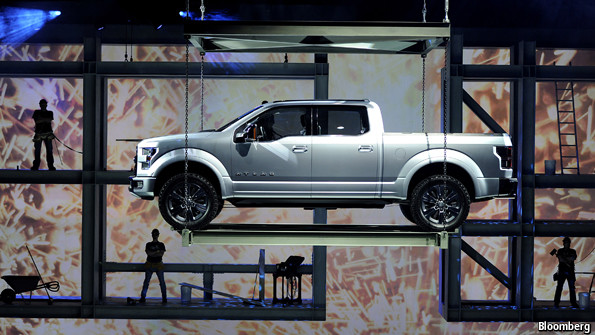
Ford, Toyota: 'Lightweighting' Automobiles. WHY? Saving Fuel Consumption: Introducing at the Detroit Auto Show

Economist: 'Lightweighting' Automobiles. WHY? Saving Fuel Consumption: 
Introducing at the Detroit Auto Show 

Economist
To Know -- Lightweight Diet--Materials:
  • Aluminum
  • Carbon Fibre
  • Magnesium
Economist: "But carmakers are increasingly focusing on what is know as “lightweighting”. And,,,new manufacturing techniques. Every gram counts."
Corvette Z06: MotorTrend

To Know -- Auto:
    • Ford: Having a Aluminum-intensive design which is lighter
    • Mazda: Reducing mass lug nuts on wheels 
    • Cadillac: Cutting edges of sheet metal panels
    • Toyota: Prius made from carbon fiber reinforced plastic frame (CFRP); Same space, weighs 3x lighter
    • Range Rover Sport--all aluminum body (less 800 pounds)
    • Jaguar F-type Coupe--will be made all metal
    • Chevrolet Corvette Z06--adding more CFRP parts, (roof, bonnet, etc.)
    • BMW i3 battery-car: Carbon-fibre body

    Ford's pick up trucks are doing better than Toyota and Honda.. and may continue to do so as they are 'lightweighting'

    How?:
    • 100 pounds = ~ 1 mile per gallon (mpg)--
    • Lose weight = Less Fuel Consumption = Save $$ (it's almost like Humans...)
    Economist: The carmaker has been tight-lipped about details, but the new F-150 version of the truck will feature an “aluminium-intensive” design between 500 and 700 pounds lighter than an equivalent one made of steel.  Ford will likely sell more than 700,000 of the new trucks annually.
    The is good news. The car industry will soon have to meet tough new emissions and fuel-economy standards. In America, for instance, regulators now require cars and light-trucks to reach 54.5 mpg by 2025. Designers and engineers are desperately searching for solutions that are not too expensive. 

    Saturday, January 11, 2014

    BBC Future: How the World Will End. Favorite Image Ever.

    BBC Future: How the World Will End. Favorite Image Ever. 

    So robots will rule the world, and we will reach 'Singularity. Well then everyone and everything will run out of energy. Sun will be done, other stars will lose its fuel and cool. 

    Introducing: Timeline of our Future. 

    BBC Future

    Renewable Energy's Problem: Storage; (Potential) Harvard's Solution: Quinones: Found in Rhubarb

    Renewable Energy's Problem: Storage; 

    (Potential) Harvard's Solution: Quinones--Which are found in Rhubarb
    SimplyRecipes: Rhubarb Pie
    One of the major setbacks to renewable energy is insufficient energy storage. There is potentially a solution to this. It's called Quinones. And it is found in Rhubarb

    This organic compound, Quinone,

    • Chemical compound in Rhubarb
    • Can hold energy (1KW hour of energy)
    • Is naturally abundant
    • Is Stable 
    • Inexpensive--third of the price of existing systems.
    • Water Soluble
    • Is safer than metal-based batteries
    Published Paper in Nature

    BusinessInsider: A "group of organic compounds, called quinones, can be used to create an inexpensive battery capable of charging and discharging renewable electricity much more rapidly than existing metal batteries can.

    The trick is that they are water soluble, which means you can set up large, inexpensive tanks to hold electricity, instead of having to engineer solid-state batteries like ones found in cars."


    Monday, January 6, 2014

    FORD’s C-Max Solar Energi: Plug-In Hybrid With A Rooftop Solar Panel.

    Imagine a Car with a Solar Panel Roof.

    Introducing (Esp. at CES) FORD’s C-Max Solar Energi: Plug-In Hybrid With A Rooftop Solar Panel.


    • Self Parking Feature Aligning Where the Most Sunlight 
    • Parked under a Lens that Concentrates Sun Rays by a factor of eight. 
    CES 2014: Ford will showcase small hybrid crossover

    Details to Know: 

    · 16ft Area of  of Photovoltaic Cells on the Roof. 

    · Cells are Manufactured by SunPower (Market Cap: $5.3B, As of 1/6/2014: $32.44 per share).

    · Cells produce 300 – 350 Watts

    · 1 hour of Charging Sunlight = 1 Mile of Driving

    · 21 percent Efficiency level (sun energy captured converted to electric current) 

    NYT: “It is programmed to use its self-parking feature to maneuver as needed, staying aligned with the most concentrated area of sunlight. The car creeps a few feet over the course of the day to keep the solar panel under the lens’s focus point. And to compensate for the change of seasons, it lines itself up at a slightly different north-south positions from day to day when it is parked under the lens.” 
    “The best place to put the magnifying lens, said Mike Tinskey, director for global vehicle electrification and infrastructure at Ford, is in the parking lot of a workplace. “Your vehicle recharges while you’re there,” he said. In six hours, the solar cells would pick up eight kilowatt-hours, enough to go about 21 miles, Ford said.” 
    A car is generally parked 95 percent of the time,” Mr. Tinskey said. “Knowing that type of statistic, it’s very likely this solar panel will be exposed to sun whether it’s under the concentrator or by itself.” 
    “Ford recommends the system for places with a weak power grid. It would also be of some help to people who want a plug-in hybrid but have no place to easily hook up to the grid. (The Solar Energi can also be plugged in if grid current is available.)”

    Sunday, January 5, 2014

    New Energy Tech: Extracting Natural Gas from Ice--ConocoPhillips is Already On It In the Arctic

    ConocoPhillips has been focusing some efforts to extract natural gas from ice in the Arctic.

    InHabitat: Image by USGS

    Because of Fracking, or Hydraulic Fracturing technology, we've all heard of the Shale Boom and the U.S's changing Energy Landscape.

    However, what we haven't heard much about is: Methane Hydrate. This substance has the potential to yield large quantities of Natural Gas (NG).

    Hydrates look like blocks of ice: lattice-like structure of frozen water molecules and methane. 


    Hydrates are found in arctic regions or shallow sediments below deep water along the outer continental shelf
    THE SCIENCE of possible recovery methods:
    American Petroleum Institute--
    1. "Heating the hydrates using hot water, steam, electromagnetic radiation (such as microwaves) or electricity. These methods would raise the temperature so that the hydrates would melt, releasing the natural gas." 
    2. "Lowering the pressure of the hydrates. Lowering the pressure would also cause the hydrates to melt, releasing the natural gas." 
    3. "Injecting chemical inhibitors. Inhibitors prevent hydrates from forming or cause hydrates that have formed to “melt.”"

    Scope of Hydrates: 
    National Journal--Energy Information Administration (EIA):
    "Estimates that hydrates contain more carbon than every fossil fuel available on Earth combined. Reports that these ice-like structures could hold anywhere from 10,000 trillion to more than 100,000 tcf (trillion cubic feet) of natural gas."

    Risks: 
    1. Surface Collapse (Higher risk of ground caving in shallower regions then deeper drilling)
    2. Methane Leakage (powerful greenhouse gas)
    However, they are similar to risks with NG in Shale:

    National Journal--“But the risks associated with hydrates are very similar to the risks that are dealt with and managed every day by the oil and gas industry in the process of drilling for natural gas in shale.”
    -Ray Boswell, program manager on methane hydrates at National Energy Technology Lab

    Wednesday, January 1, 2014

    FT Numbers of 2013: Energy

    Financial Times Numbers of 2013: Energy


    26% : The annual rate of increase of oil production in North Dakota, center of Shale Boom (Marcellus)

    How the Iran Nuclear Deal Impacted Gas Prices

    7.8m Barrels: Number of Barrels of Oil in the U.S. produced in one day. Highest in 24 Years